Oppenauer Oxidation
时间: 2020-11-20
作者: 百灵威
分享:

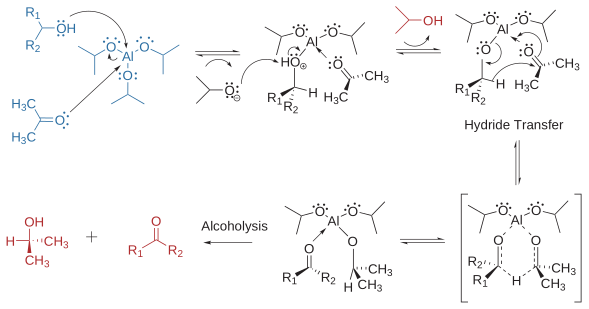
The oxidation of primary and secondary alcohols with ketones in the presence of metal alkoxides such as aluminum isopropoxide (Al(i-PrO)3) to yield aldehydes and ketones is known as the Oppenauer oxidation. The alcohol substrate binds to aluminum, and the ketone coordinates to it, forming a six-membered transition state that allows the alkoxide to transfer a hydride to the ketone, yielding a ketone and an i-propyl alcohol respectively. The reaction is reversible, favoring a large excess of the starting ketone.
- Reagents: Metal Alkoxides (e.g. Aluminum Isopropoxide, t-Butoxide, or Phenoxide), Carbonyl Compound Oxidant (e.g. Acetone)
- Reactant: Alkyl, Aryl, Alkenyl 1° or 2° Alcohol
- Product: Ketone or Aldehyde, i-Propyl Alcohol
- Type of Reaction: Oxidation
Mechanism
Original Paper
Top Citations
Related Reactions
- Meerwein-Ponndorf-Verley
- Tishchenko Reaction
- Synthesis of Aldehydes
- Synthesis of Ketones
Related Compounds

服务科技与工业发展 造福人类

关注微信公众号

北京市朝阳区大望京中心A座501
电话(QQ): 400 666 7788
电话:+86 10 59309000
传真:+86 10 8284 9933
本网站销售的化学产品仅供研发或工业应用,不直接用于食品、药品、临床诊断或治疗。
