Hofmann Elimination
时间: Invalid Date
作者: 百灵威
分享:
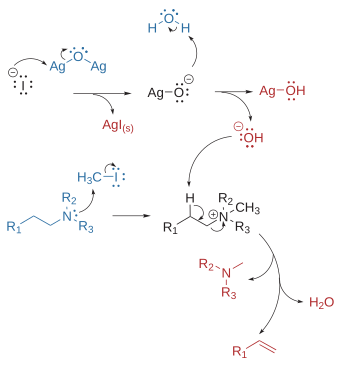
The Hofmann elimination uses methyl iodide, silver oxide, water, and heat to convert a 1°, 2°, or 3° amine with a β-hydrogen to an alkene. First exhaustive methylation of the amine occurs with excess methyl iodide to yield the corresponding ammonium iodide salt. The iodide ion then attacks silver oxide, forming insoluble silver iodide, and a silver oxide ion, which deprotonates water to make a hydroxide ion. Upon heating, hydroxide ion abstracts a β-hydrogen, forming a 3° amine, an alkene product and water. Preferential formation of the less substituted olefin (Hofmann product) occurs in acyclic substrates.
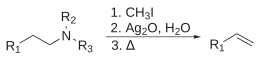
- Reagents: Methyl Iodide, Silver Oxide, Water
- Reactant: 1°, 2°, or 3° Amine with β-Hydrogen
- Product: Alkene, Trimethylamine
- Type of Reaction: β-Elimination (E2)
Mechanism
Original Paper
Top Citations
Related Reactions
- Aldol Addition
Related Compounds
- Methyl iodide (CAS 74-88-4)
- Silver oxide (CAS 20667-12-3)

服务科技与工业发展 造福人类

关注微信公众号

北京市朝阳区大望京中心A座501
电话(QQ): 400 666 7788
电话:+86 10 59309000
传真:+86 10 8284 9933
本网站销售的化学产品仅供研发或工业应用,不直接用于食品、药品、临床诊断或治疗。
