Reformatsky Reaction
时间: Invalid Date
作者: 百灵威
分享:
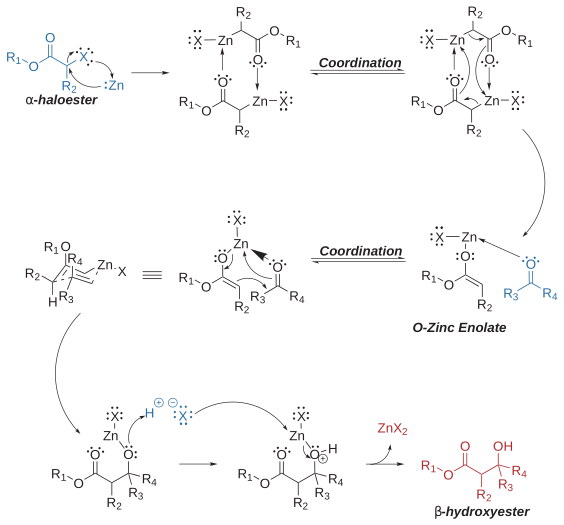
The Reformatsky reaction uses zinc metal and an acid work-up to convert an α-haloester and an aldehyde or ketone to a β-hydroxyester. Zinc metal is first inserted into the carbon-halogen bond of the α-haloester, followed by the formation of an O-zinc enolate, which undergoes an aldol reaction with the carbonyl compound, passing through a six-membered chair-like transition state. An acid work-up cleaves the zinc-oxygen bond, producing a zinc (II) salt and a β-hydroxyester.
Tips: Several techniques have been used to activate the zinc metal and improve yields. For example, pretreatment of zinc dust with a solution of copper acetate provides a more reactive zinc-copper couple and exposure to trimethylsilyl chloride can also activate the zinc. Note also that this reaction can be conducted with highly hindered ketones and can be adapted for intramolecular aldol reactions.
- Reagents: (Zn, Mg, Cd, etc.) or Metal Salt (CrCl2, TiCl2, etc.) Catalyst, Inert Solvent (Et2O, THF, 1,4-dioxane, etc.), Acid Work-Up
- Reactant: α-Haloester, Aldehyde or Ketone
- Product: β-Hydroxyester
- Type of Reaction: Zinc Enolate (Aldol) Condensation
- Bond Formation: C-C and C-OH
Mechanism
Original Paper
Top Citations
Related Reactions
Related Compounds

服务科技与工业发展 造福人类

关注微信公众号

北京市朝阳区大望京中心A座501
电话(QQ): 400 666 7788
电话:+86 10 59309000
传真:+86 10 8284 9933
本网站销售的化学产品仅供研发或工业应用,不直接用于食品、药品、临床诊断或治疗。
