Kolbe-Schmitt Reaction
时间: 2020-11-20
作者: 百灵威
分享:
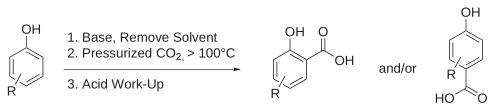
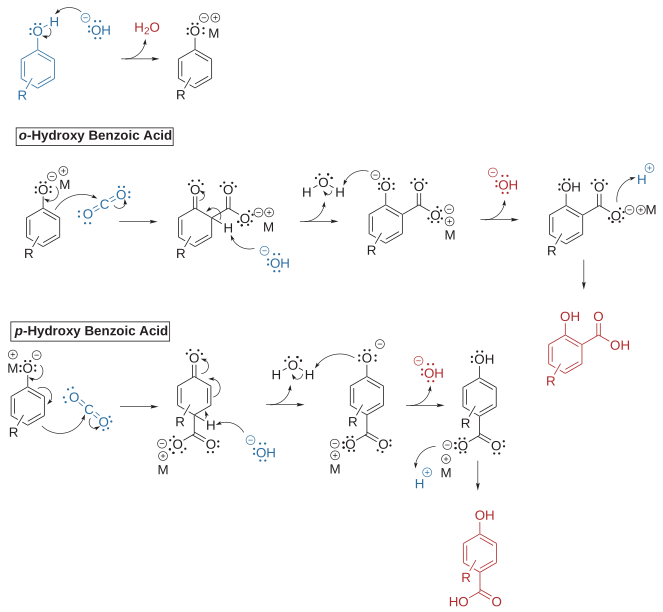
The Kolbe-Schmitt reaction uses a base, carbon dioxide, and an acid work-up to convert a phenol to an ortho- or para- hydroxy benzoic acid. First the base deprotonates the phenol, forming phenoxide, which attacks carbon dioxide. Tautomerization and an acid work-up yields the final product. A large counterion such as cesium hinders attack of the carbon dioxide at the ortho position, favoring the para-substituted product. Small counterions such as sodium or potassium ion favor the ortho product.
- Reagents: Base [Alkali or Alkaline Earth Hydroxides (e.g. NaOH, CsOH, Ca(OH)2), K2CO3, KHCO3], Carbon Dioxide (5-100 atm), Acid Work-Up
- Reactant: Phenol, Substituted Phenol, Naphthol or Electron-Rich Heteroaromatic Compound (e.g. Hydroxypyridine, Carbazole, etc.)
- Product: Ortho- or Para-Substituted Aromatic Hydroxy Acid
- Type of Reaction: Electrophilic Aromatic Substitution
Lab Tips
- Reactants, reagents, and solvents should be thoroughly dried before use as the presence of water decreases the yield of product.
- Phenols with more than two hydroxyl groups can be carboxylated with carbon dioxide at atmospheric pressure.
- Kürti, L., Czakó, B. (2005). Strategic Applications of Named Reactions in Organic Synthesis; Background and Detailed Mechanisms. Burlington, MA: Elsevier Academic Press.
Mechanism
Original Paper
Top Citations
Related Reactions
- Synthesis of Alkyl Bromides
- Synthesis of Alkyl Chlorides
Related Compounds

服务科技与工业发展 造福人类

关注微信公众号

北京市朝阳区大望京中心A座501
电话(QQ): 400 666 7788
电话:+86 10 59309000
传真:+86 10 8284 9933
本网站销售的化学产品仅供研发或工业应用,不直接用于食品、药品、临床诊断或治疗。
